


Public comments regarding a new federal rule that would leave about 80% of wetlands unprotected and strip basic protections from vast numbers of streams previously covered under the jurisdiction of the Clean Water Act are due by tomorrow, Jan. 5. The implicit goal of this rule is to allow for more development and pollution at the expense of our nation’s water quality, flood resilience, outdoor recreation, and nature-based systems.
Use KCCNY’s partner American Whitewater’s easy-action form today to deliver a message to the Environmental Protection Agency AND send a letter to your reps in Congress letting them know the integrity of the Clean Water Act is under assault–and that you expect them to step up to protect our nation’s rivers.
You can also send a comment directly to the administration using the guidance and details in our online article covering this intentional gutting of the law that has done so much for cleaning up our rivers over the past half century.
The government has heard from industry groups that want more latitude to pollute and develop streams and wetlands–and they listened. Now they need to hear from the rest of us!
Here’s a sample comment you can use.
As a water enthusiast with the Kayak and Canoe Club of New York (KCCNY), I am writing to urge Congress to pass a new Clean Water Act and protect our intermittent streams/wetlands.
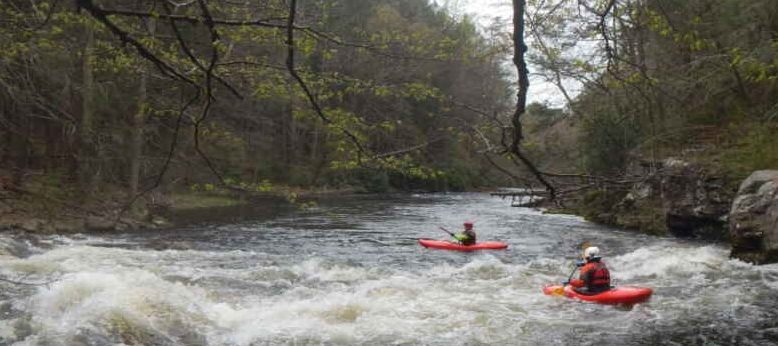
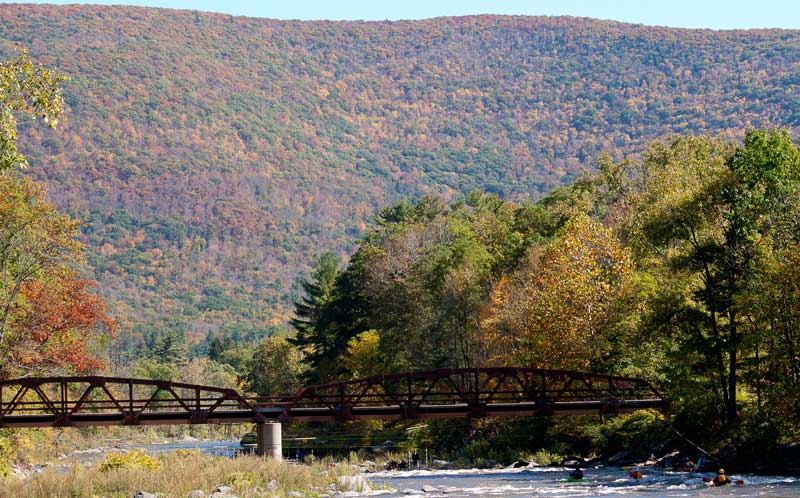
Kayakers and canoeists collectively spend countless hours enjoying and recreating on our American rivers. And as we are intimately aware, that river water comes from upstream sources–including intermittent streams and wetlands.
I express my concern that Environmental Protection Agency’s proposed new rule updating the definition of “Waters of the United States” jeopardizes the incredible improvements to our nation’s quality thanks to the Clean Water Act. Congress needs to ensure that the intent of this landmark law is preserved and that intermittent streams and wetlands are also protected under the CWA.
This issue is important to me for several reasons, including (1) health/safety, (2) economic, and (3) intangible—yet no less important–effects.
First, my fellow KCCNY members and I do not want to put ourselves at greater pollution risk. We do not want to worry about our short- and long-term health risks while doing something we love. And we do not want to worry about the health/wellbeing of our complex and interconnected river ecosystems, and instead want to continue to experience healthy wild and re-wilded natural landscapes. Decreasing the CWA’s legal protections endangers our safety and the wellbeing of those ecosystems.
Second, protecting water quality is important to the rural communities that depend on recreation and tourism, as well as businesses that are connected to watersports. KCCNY alone organizes over 50 members to take dozens of trips around the Northeast, where we purchase gear, food, lodging, etc., and thus support the whitewater-adjacent economy. This impact is not trivial. An economic analysis by the Outdoor Industry Association (OIA) published in 2017 found that watersports result in $139 billion retail spending and 1.2 million direct jobs, accounting for $44 billion in salaries and wages, $11 billion in federal taxes, and $9 billion in state and local taxes. According to the OIA, participation in watersports has shown a sharp increase over the past five years. These economic benefits are surely stronger now and will be severely compromised if the water quality in our waterways is allowed to decline.
Third, these headwater streams and wetlands aren’t simply where we recreate: they are crucial for life itself. They supply drinking water and provide important habitat for aquatic species—intangible yet critical benefits that demand responsible and selfless leadership to preserve rather than exploit.
I ask for your leadership in protecting the health of our water systems. I ask for your noticeable action to help pass a new Clean Water Act, or at the very least more clearly define the scope of its crucial protections.
Thank you for listening to my voice and the voice of my fellow whitewater enthusiasts.
Note the first part of this article was composed by Evan Stafford
Communications Director
Flow Research
American Whitewater