


When
Coordinator:
Andrea Dover
Non-members can come as a guest,join or renew or contact us for more info.
Designed for outdoor enthusiasts and anyone who works or spends time in remote environments, this course teaches advanced skills to be used in emergencies when help from professional first responders may be far away.
The Wilderness First Aid (WFA) course covers: – What is backcountry first aid – What is the golden 24 hours – Splinting and bandaging – Prioritizing needs – Patient assessment – Patient care – How to improvise, modify, and adapt.
The class is 16 hours in length, and one must attend all 16 hours to be trained and certified in WFA. The class is fast paced in order to cover all the material and to get hands on practice through various scenarios. Previous first aid training is not necessary. Participants will receive a certificate valid for two years from the Emergency Care & Safety Institute (ECSI).
Students should bring their river dry bags, throw ropes, PFD, helmet, skirt and whitewater clothing, break-down paddles, tubular webbing, etc. to learn how to use what they carry to deal with back country medical injuries/situations. All students will be “patient” at some time during the practice sessions. You will learn how to improvise WFA tools and materials with what you carry in your packs.
Instructor: Richard Dabal has taught Wilderness First Aid for over two decades, training thousands of adventurers to handle medical emergencies in remote 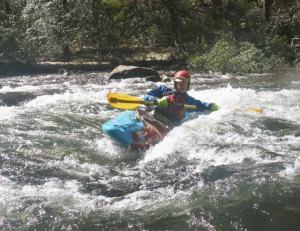 environments. A lifelong outdoor enthusiast, Richard is an avid whitewater kayaker, hiker, and cyclist, as well as a dedicated Adirondack 46er and Winter 46er. His hands-on, scenario-based classes leverage his deep mountaineering and paddling experience, giving students the practical skills and confidence needed to explore the backcountry safely.
Meals: Students are solely responsible for their own lunch, snacks, and water both days. Please pack a bagged lunch that does not require refrigeration. We will take a generous break, but there may not be time or nearby facilities to purchase food.
Clothing Notice: This course involves active, hands-on practice, often outdoors on various terrain. You will be acting as a “patient” at some time during the sessions. You must wear clothes you are not afraid of getting dirty, wet, stained, or potentially torn. We will be practicing bandaging, splinting, and hypothermia wraps in the mud, dirt, and brush.
What our instructor carries in his whitewater drybag/in boat, on the river:
– Candy Bars or energy blocks
– full first aid kit
– chemical foot/hand warmers
– emergency blanket
– cravat
– break down paddle
– throw rope
– tubular webbing sling with carabiner
Cabins and tent sites are available for rent at the New Weis Center. More info on accommodations coming soon!
KCCNY members can get reimbursed for 50% of the cost ($80) after coordinating 4 trips after taking this course. See Reimbursement for Training and Coordinating for complete details.